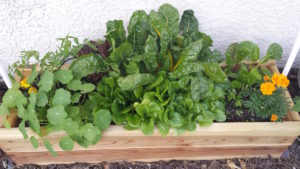
Here I compiled the most useful data I’ve found when researching benefits of growing cover crops in your home garden, how to select your cover crops and how to remove cover crops so you can plant your vegetable garden again! A cheat sheet if you will. Finally a few examples so you can get a better idea of just how rewarding cover crops can be even if you have a smaller garden.
9 benefits of cover crops aka green manure
That’s right, cover crops are also known as “green manure” because they are either left on top of your soil as a mulch or tilled into your soil. No matter how you do it you are growing your own compost that you can leave in place. So easy!
Additional benefits of cover crops include:
- Keeps your garden lush and green, much prettier than a plot of dirt, eh?
- Cover crops can suppress weeds by choking them out.
- Some cover crops even release chemicals that keep soil born diseases and pests at bay (daikon radish comes to mind)
- Prevent erosion as the plant’s roots hold the soil in place.
- Increasing organic matter and nutrients as they pull them up from the depths or from the air and leave them behind as they decompose.
- Increasing activity of earthworms and beneficial microorganisms! We need this.
- Aerate the soil so that water, air and plant roots have a space to do their thing.
- Creating a habitat and supplying food (pollen and nectar) for beneficial insects and pollinators. Like a bed & breakfast for beneficial bugs. You’re so sweet!
- Lots of cover crops are even edible! Need to juice some wheat grass? Need a giant daikon radish? Feel like making some kale chips? Beet greens for your smoothie? Want to try sautéed turnip greens? You can harvest up to a third of your edible crops while still reaping their cover crop benefits. Bonus!
Are you sold? Great. Let’s get to the good stuff.
Home garden cover crop basics
Cover crops in a home garden are crops planted to improve your soil, garden aesthetic, feed the bees and more (below). Yes, farmers use cover crops on a large scale to control pests, break up compacted soil, add biomass, add nitrogen and more… but you can too!
Here’s how:
- Select your cover crop plants (listed below).
- Grow your cover crop (some of which you can eat!).
- Mow or cut back your crop before it goes to seed.
- Get rid of the crop (listed below).
- Plant your garden in revitalized soil!
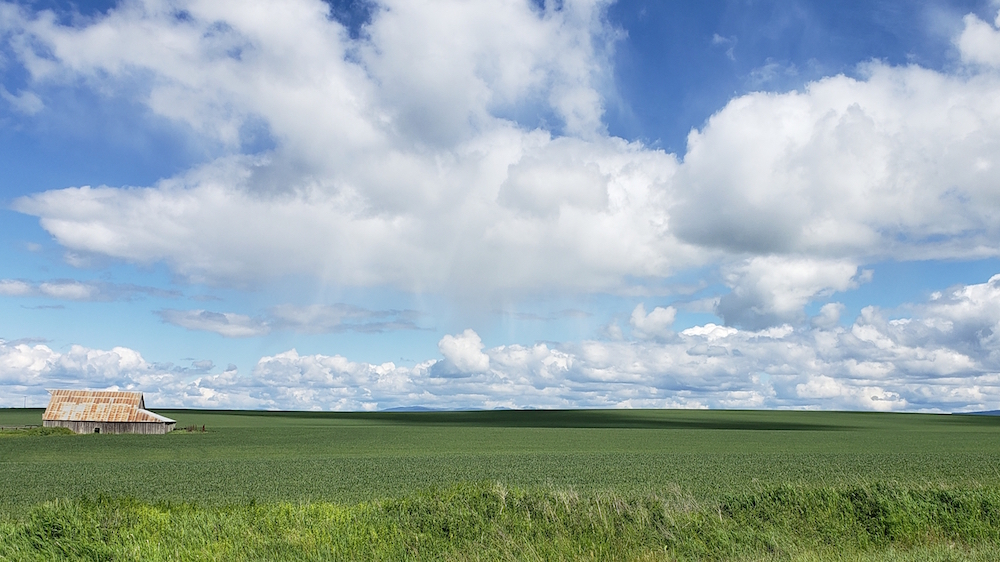
You don’t have to own farmland to benefit from cover crops in the home garden!
Select your cover crop! 5 main crop types
1. Legume cover crops
Legumes make an excellent cover crop for good reason, they pull nitrogen out of the air and put it in the soil! Amazing!
Alfalfa, crimson clover, hairy vetch, cowpeas, fava are a few varieties of legume cover crops.
Note: The nodules on the roots that fix nitrogen into the soil will slow this process once the plant is spending it’s energy developing seeds like beans and peas.
2. Non-legume cover crops
Non-legume crops keep nutrients in the soil and they suppress weeds by crowding them out. Nice.
Can you see the benefit of growing both a legume and non-legume together?
Non-legume cover crops include sugar beets, buckwheat, barley, brassicas/mustards, oats, winter rye, cereal rye, annual ryegrass, sorghum sudangrass and triticale.
3. Summer cover crops
Need a cover crop for the summer? Try legumes, crimson clover and cow peas. Buckwheat is a great non-legume cover crop for summer but it should be cut back after it flowers, before it goes to seed. Sorghum-Sudan grass is extremely drought tolerant once established but needs a bit more maintenance as it can get quite tall.
4. Winter-kill
The benefit of winter-kill crops is that they grow for a few months (after your garden harvest) before being killed by freezing temperatures. Sounds sad? It’s not! The dead plants become mulch you use next spring when you plant your early spring veggies. Sweet.
Winter kill cover crops include brassicas (cabbage and mustard family) like turnips and radishes, crimson clover, oats and field peas.
Be sure to check your growing zone first as every USDA zone is different. Need to look up your zone by your zip code? It’s easy and takes 2 seconds.
5. Overwinter or winter-hardy
Winter-hardy cover crops get planted late in the season and thrive all winter long. Yes, you have to mow/chop them down in the spring before they flower but look at all the weeds they suppressed, biomass they added, nutrients they retained in the soil, and the compaction they prevented by contributing to aeration!
Overwinter cover crops include crimson clover, hairy vetch and winter rye. Even wheat makes a good cover crop if you’re in a cooler climate. If you live in a milder climate Austrian winter peas are a fun crop as you can harvest the leaves for fresh salads throughout the winter.
Confused by crimson clover like I was? Here’s a map to give you a better idea of how/where to use it!

Mow or cut back your crop
Mowing or trimming your cover crop is done for a few reasons.
- You can’t let these grasses get unruly. If they get too big your mower (or tiller even) may not be able to handle it.
- Mowing chops the plants up into tiny pieces that break down quicker, adding biomass to your soil when it’s tilled in.
- Suppress weeds by creating a layer of mulch out of your crop.
- Mowing may also help develop stronger, deeper root systems.
Keep your mower at at it’s highest setting so you trim the crop not destroy it.
A hand held string trimmer (weed-whacker) works like a champ if you have a smaller space.
How to get rid of a cover crop in a home garden
Mowing a cover crop
Mowing to the ground after the crop sets flower but before it goes to seed will get rid of your crop. Make a pass with the mower at the highest setting then again at ground level to really break up the biomass and get rid of the cover crop. Till or no-till it’s up to you. A pushable lawn mower can cost $100-300.
Tilling your cover crop
Tillers/Rototillers help break everything up and mix it into the top layer of soil for you. Great for shorter or pre-mowed crops. Smaller tillers are almost the size of a pushable lawn mower and can be found for around $100.
Using black tarps to kill cover crops
Black tarps will block out sunlight and airflow effectively eliminating the cover crop. This method may work best for you if you grew grasses of some sort and they got too tall to mow. Knock these grasses over the best you can so they are easier to tarp… roll a log over them, stomp them down with boards, go over them with a lawnmower that’s not on, etc.
Cover with black tarps and secure with rocks, bricks or boards around the boarder to keep the tarp in place for the next month.
For smaller gardens cardboard or large boards work too.
Come spring, rake and compost the debris when planting seeds or turn it into the soil when planting transplants. The debris may pose too much of an obstruction for emerging seedlings but planting your transplants, like tomatoes, they will have a much easier time getting established.
Black weed-suppressing tarps can run from $25 to just over $100 depending on your garden size and if you want to keep it to reuse it or not.
Clear plastic to kill cover crops
Clear plastic works a lot like black tarps but works best in summer to really utilize the heat… Try that in winter and you’d just make a greenhouse!
You know how a kiddie pool can kill a patch of grass in the blink of an eye? That’s what we’re trying to do to that cover crop.
Clear plastic sheeting works best if it’s “heavy duty”, the thick stuff. Can be found around $12-20 again, depending on the size of your garden crop. Easy to pick up at Walmart or Home Depot.
Winter-kill means the crops die with a freeze
Winter-kill crops as we discussed earlier die naturally during the winter freezes. If your crop is smaller in size like clover or radish it can be left to decompose in place and left as mulch. Roots are also fine to decompose in the soil, you can plant right on that come spring.
How easy was that?!
Herbicides
I’m not even going to discuss herbicides because you’re better than that. XO
Best cover crop for a home garden?
Plant a mix of both legume and non-legume cover crops to reap the best benefits.
If you have a larger plot, think about the supplies you may need to kill them back or till them under. This could include black tarps, mower (possibly a riding mower) and tillers. If you don’t have big equipment don’t grow big things, keep it manageable. A plot of daikon (listed below) and Austrian peas can easily be mowed leaving you with aerated soil, nitrogen and a garden that does not need to be tilled… plus edible crops eaten throughout the winter.
If you have a smaller garden it may be possible to cut things back by hand or use a weed whacker. Imagine having a few stalks of sorghum-sudan grass that you cut back several times per growing season surrounded by cow peas… the sorghum will break up your soil and the cow peas will fix nitrogen and supply you with leafy greens. Mowing will help chop everything up into a nutritious mulch for your darling garden!
The key here is to be strategic as every garden and gardener is different!
Examples of a few cover crops and how you might use them in a home garden
Oilseed radish/Daikon radish
Oilseed radish (aka forage, fodder, and Japanese radish or daikon) makes a great cover crop after harvesting primary crops (or even sown between corn stalks before corn is harvested).
Tops do not need to be tilled into the soil as they decompose quite quickly. Leave these radish tap roots in the ground to decompose in the spring while they release nitrogen they pulled up from depths of almost 6 feet! These daikon radishes break up and aerate soil like a boss.
Don’t forget these beauties are edible! Mild and less peppery than a typical radish. Use them like you would a carrot… pickled, steamed, roasted, sautéed, soups and stews, stir fry, baked and more! I hear it makes a mean keto “potato” salad. High in all kinds of vitamins and minerals.
Also, the chemicals they give off called glucosinolates deter soil born pests such as nematodes. Sign me up.
Cow peas
Black eyed peas are a common variety. Cow peas can be found as climbing, trailing or erect varieties and can grow in sandy soils with low rainfall. They can fix a decent amount of nitrogen in as little as 60 days.
Popular in Africa and Asia, over 200 million people across the globe consume cow peas on a daily basis. Not only can you eat the protein packed seeds, but they can be eaten as green beans when immature and the highly nutritious leaves can be eaten as well.
The dietary folic acid, iron, copper and potassium, tryptophan, calcium, zinc, vitamin D and more make these guys a serious staple!
Don’t forget they also grab nitrogen from the air and pack it into your soil for you.
Austrian winter peas
These little cuties can provide you with all the benefits of cover crops plus they are great to eat! The young greens have the texture of lettuce and taste like spring peas. The pods are great when eaten young or the mature seeds can make a killer soup!
Austrian winter peas grow nice and neat and are easy to mow or cut back by hand before spring planting.
Sorghum-sudan grass
This weed suppressing, drought resistant powerhouse is a hybrid of sorghum and an African grass. Mowing several times can increase the vigorous roots and really break up compacted soil. Keep in mind this stuff gets tall and thick… think “corn stalks” so if you let it get too tall it may be hard to mow.
Just before a deep frost, mow and till sorghum-sudan grass into the soil while it’s green. Wow, that’s a lot of biomass! If you do this, wait several weeks before planting in that space while the weed suppressing compounds dissipate. You can also mow it and leave the roots to hold your soil preventing erosion before a freeze.
Crimson clover
Ever met a bee who didn’t appreciate crimson clover? This cover crop is easily hand scattered into maturing crops like corn and left to do it’s nitrogen fixing thing sometimes clear through the winter into the spring depending on your climate.
There you have it! That should cover the basics so that you can get started utilizing all the benefits of cover crops for your home garden. Like anything, it may seem daunting at first especially if you don’t know where to start… but now you do! So get out there and get your hands dirty. Next year you’ll be a seasoned pro.
Good luck! xo -Myra