
Here’s a brief guide to starting plants in water. Herbs to ornamentals, garden to house plants. You can do this!
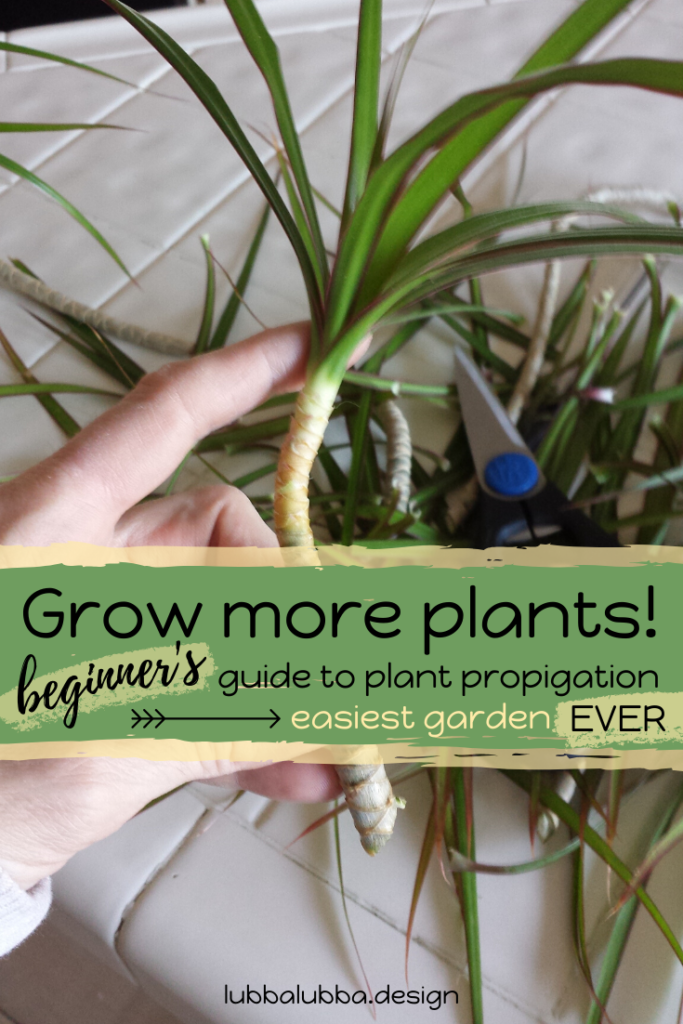
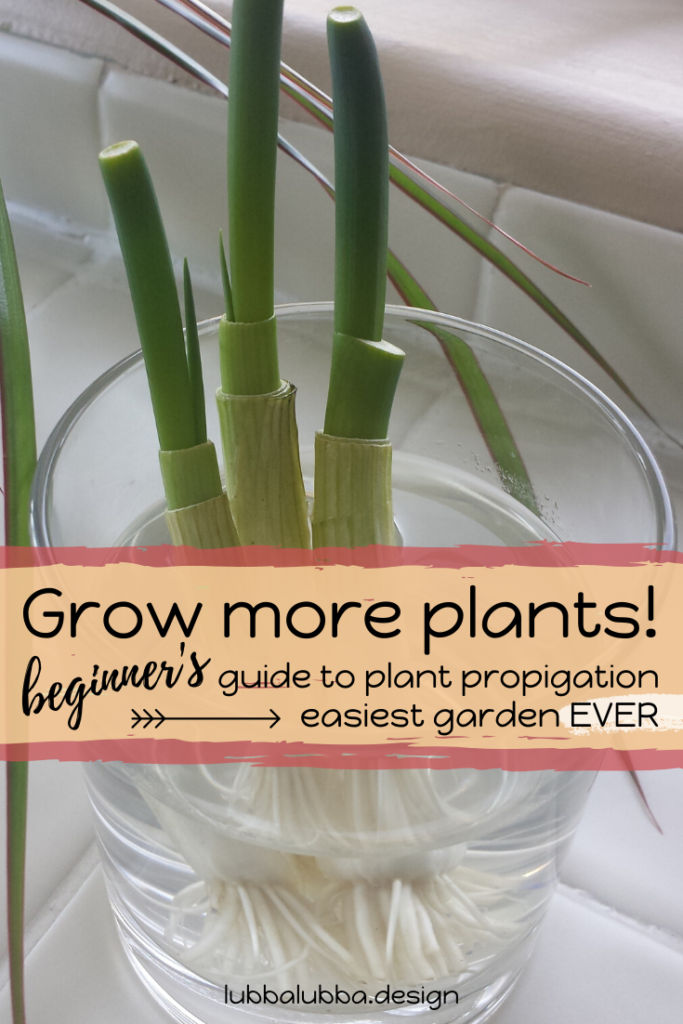
So you bought a big, fresh bunch of herbs at the grocery store and have some left over… perfect. Here’s your chance to start the easiest beginner garden ever! Water propagation just means growing roots in water. You can later transfer them to soil where they can really take off.
Creating Plants From Cuttings At It’s Simplest
- Make a clean cut leaving a few inches of stem.
- Pinch off or snip off all but a few leaves on the very top.
- Place your plant in a small cup of room temperature tap water.
- Set in indirect light.
- Wait a few weeks until roots are a few inches long.
- Replant in a pot of soil.
- Water regularly.
Yes, It’s that easy but lets take a closer look if you’d like to know a little more… Also included here is a handy list of herbs and ornamentals for you to try followed by a quick explanation of the basics. You’ve got this!
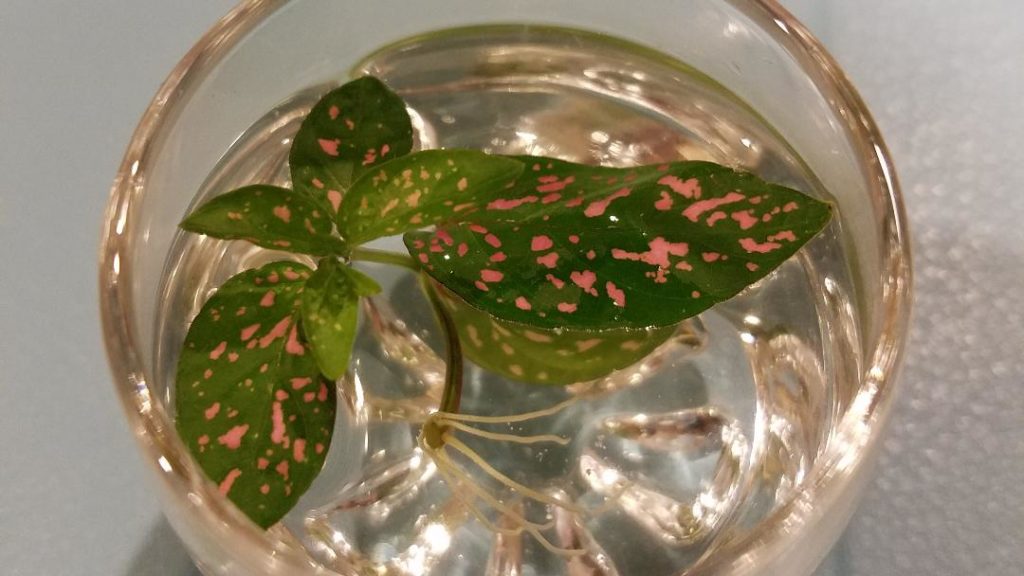
From the kitchen- the ones you want on hand while cooking dinner
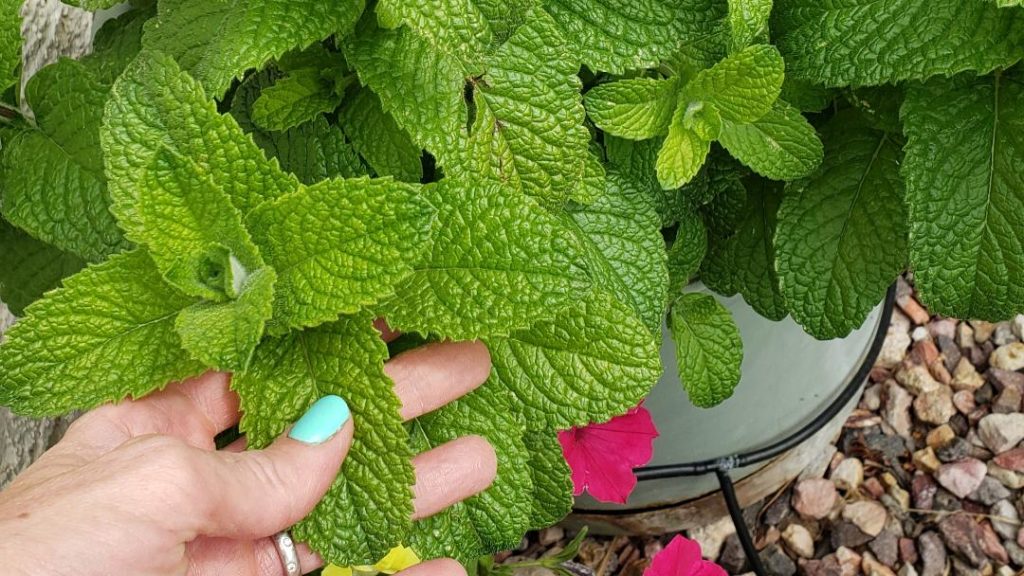
- Mint
- Basil
- Sage
- Oregano
- Rosemary
- Thyme
- Lavender
- Green onion
Ornamentals- the decorative plants for home or office
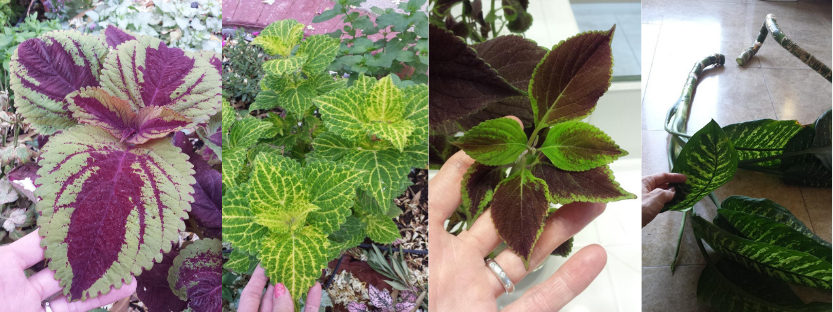
Don’t be discouraged if you don’t recognize these names. Let me give you a quick run down…
- Geraniums– A flower you no doubt have seen at your grandmas house in a big pot on the front porch.
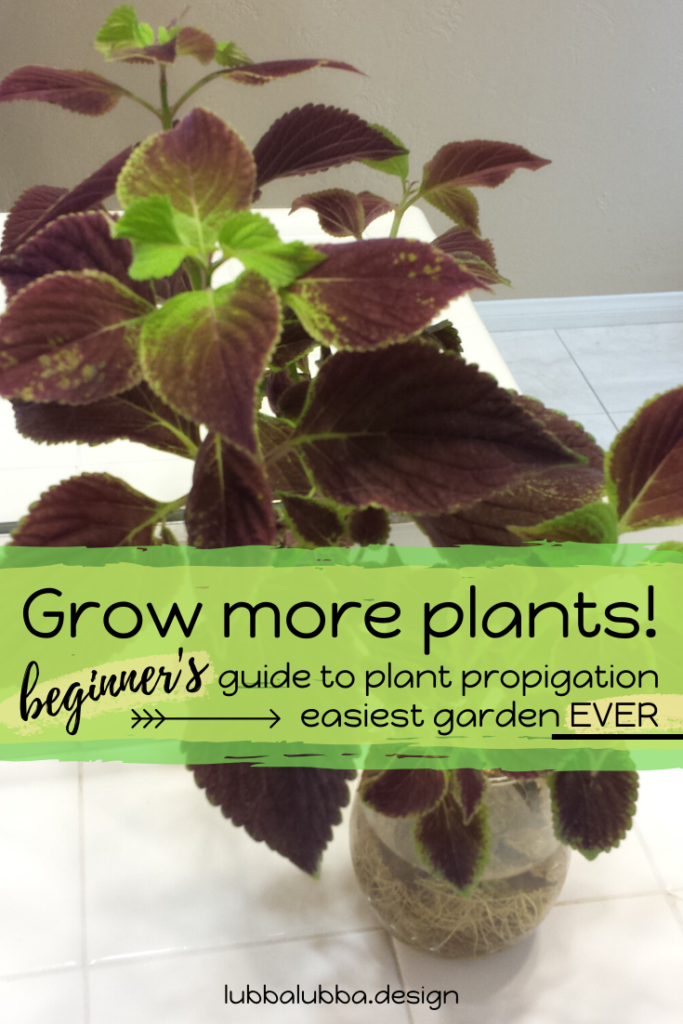
- Coleus– Outrageously gorgeous multicolored foliage that comes in the widest range of colors. We’re talking shades of greens, purples, rusty burnt oranges, yellows… it’s unreal. Who needs flowers anyway? Check out this link for coleus growing tips!
- Dracaena– Looks like a mini palm tree. I have gone a month forgetting to water it, no big deal. Great indoor decor. (pics below)
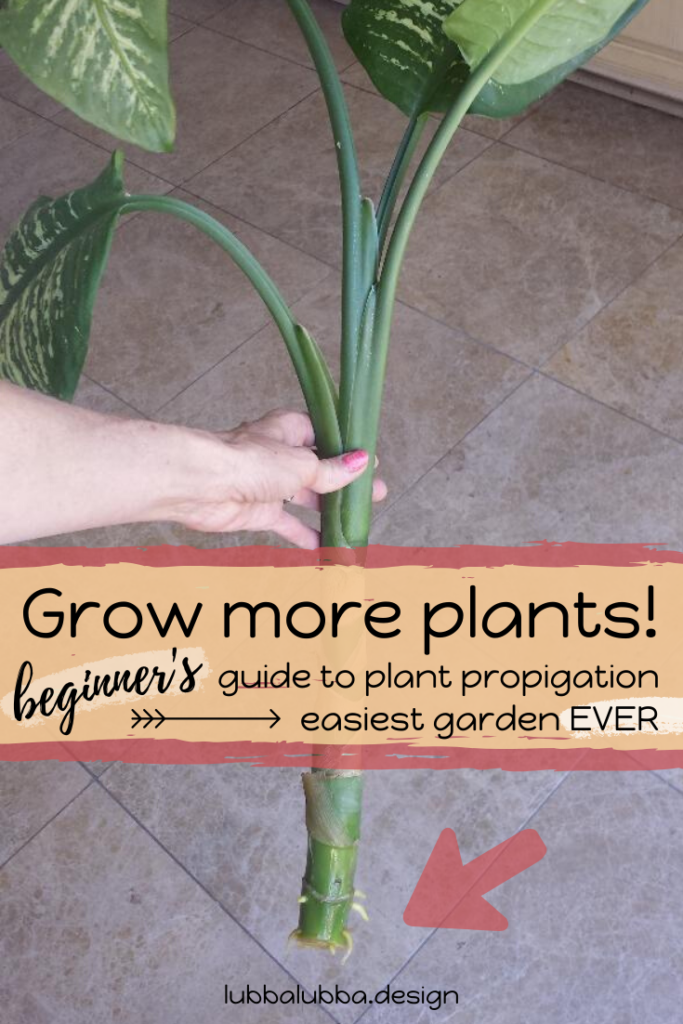
- Dumb cane– Big, shiny, multicolored, tropical looking leaves the size of your face. Great indoor decor to add a splash of green. Easiest plant I’ve ever had. I currently have one in a big vase of water where It’s lived for the last TWO YEARS. It’s right next to one I have planted in soil and you cannot tell the difference… It loves it. AND… on a quiet night you can HEAR the leaves unfurl if you happen to be sitting next to it. WHAT?!
- Monstera– This is the “it” plant right now. Leaves that can get up to 2 feet across if your lucky. Giant, shiny, deep green leaves that look a bit like swiss cheese. This one trails down from the trees in tropical locations. Simply stunning.
- Pothos– This is the low-light plant with the heart shaped leaves that sits in a little pot, trailing down from atop the filing cabinets in every office ever. Great way to start but imagine this guy if he had better light! Want to add a bit of “tropical” to your bathroom? This is the guy.
- Philodendron– Always confused with pothos. Super similar but I feel this one can really take over if you let it.
The basics explained
- Water– Shot glasses for single cuttings and smaller cups for multiples work great. Rinse out and refill every few days. IF the water starts to smell funky it’s most likely because there is dead tissue rotting in the water… leaves or a dead cutting. Find the culprit and toss it out. I like to have 3 or 4 cuttings at the same time so incase this happens I have a back up. I’d say roughly 1 in 10 cutting of mine have been fails.
- Leaves– The reason behind snipping off most the leaves is so that a few are left behind for photosynthesis but not so many as to use up all the nutrients. Without a root system chances are supporting a whole plant are pretty slim. Pinch off flowers and buds as well as they are just wasting the energy we want sent to make ROOTS!
- Stem– Just a few inches should work. Green, non-woody stems seem to work best. You may keep hearing about “cut below the node” but honestly I find that no matter where I hack my plant off it can’t help but be below a node. Nodes are the spot on the stem where leaves, branches, and arial roots (philodendrons and dumb canes do this) grow from. Don’t stress about this part. I’d rather you fail at a cutting than not try.
- Light– Simple indirect light is what you need. Placing your cutting in direct sun light would be too stressful and no doubt burn it. Too dark and it won’t get the energy it needs and may take a bit longer to root, although still worth a shot if needed.
- Planting– When your cuttings have roots that are a few inches long you can transfer them into a pot of soil. Be gentle with your little babies and water them in nicely. Do your kiddos play with those little orbs that they swell in water? Ever wonder what to do with them afterwards? This is it. Smash some up and add them to your soil mix to help retain and regulate soil moisture which is actually their intended use. (Those super absorbent polymers are also used inside baby diapers.) Thanks US Department of Agriculture!
- Humidity– To help some of your more delicate plants from loosing too much moisture through evaporation it could be wise to mist them with water or lightly cover them with a clear plastic container. Honestly, I have never done this step and I live in the desert here in the southwest. I LOVE to garden but I also hate to stress out over it. The plant is either going to live or not. I garden like a Spartan. LOL
- Rooting hormones– This comes as a powder that the stem in dipped into prior to planting to help it root more quickly. I’ve honestly never needed to use the stuff. It is hazardous if inhaled and sounds like an unneeded mess to me, but by all means try it out if you feel the need. Rooting a cutting in a SMALL container of water (vs. a large container) helps concentrate the natural rooting hormones given off by the stem as far as I understand it.
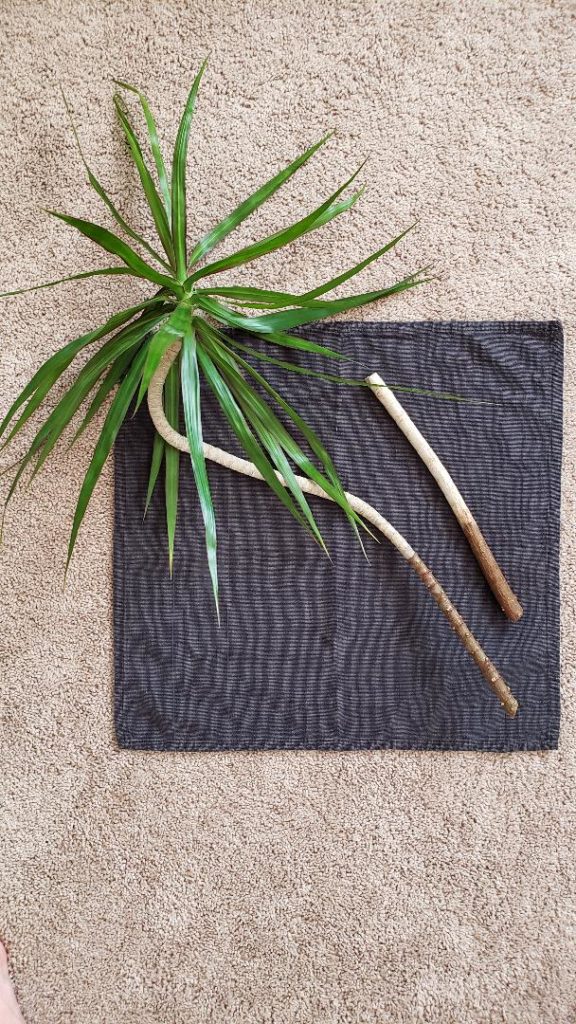
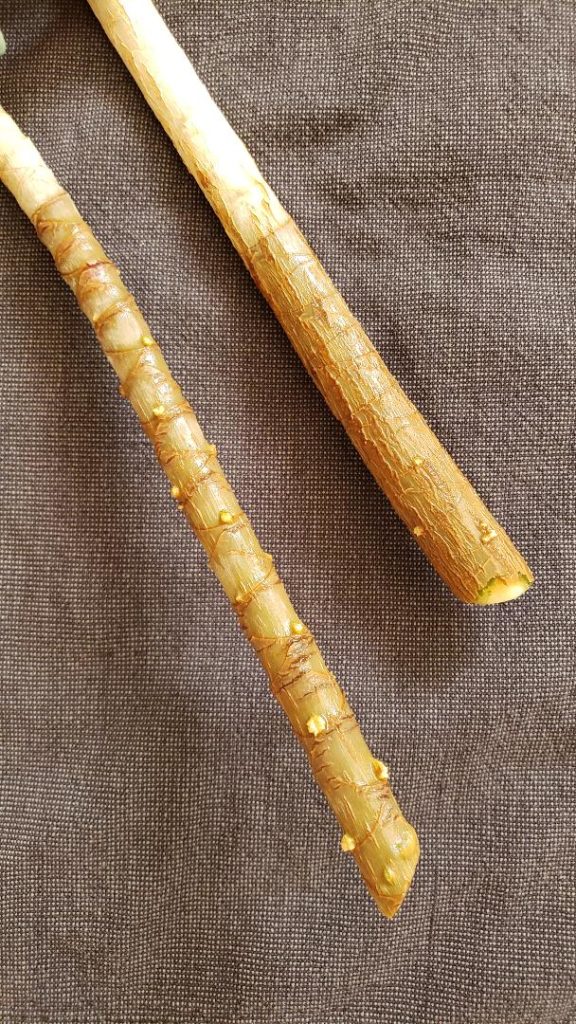
The photos above show dracaena cuttings. The stem on the left in both photos shows a fair amount of leaves still attached after several of the larger leaves were removed. The stem on the right is just a segment of the stem, cut on both ends, the bottom was placed in water. (If you forget which end was up or down simply match the stem pattern to the original plant)
After two weeks and a couple water changes the roots are starting to form! They are more noticeable on the stem with the leaves. Woo hoo!!
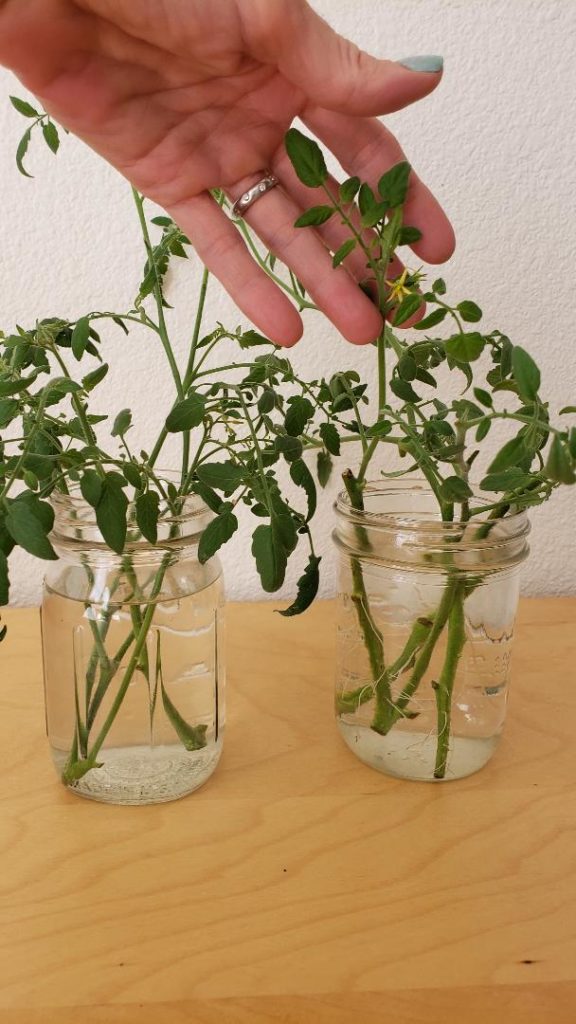
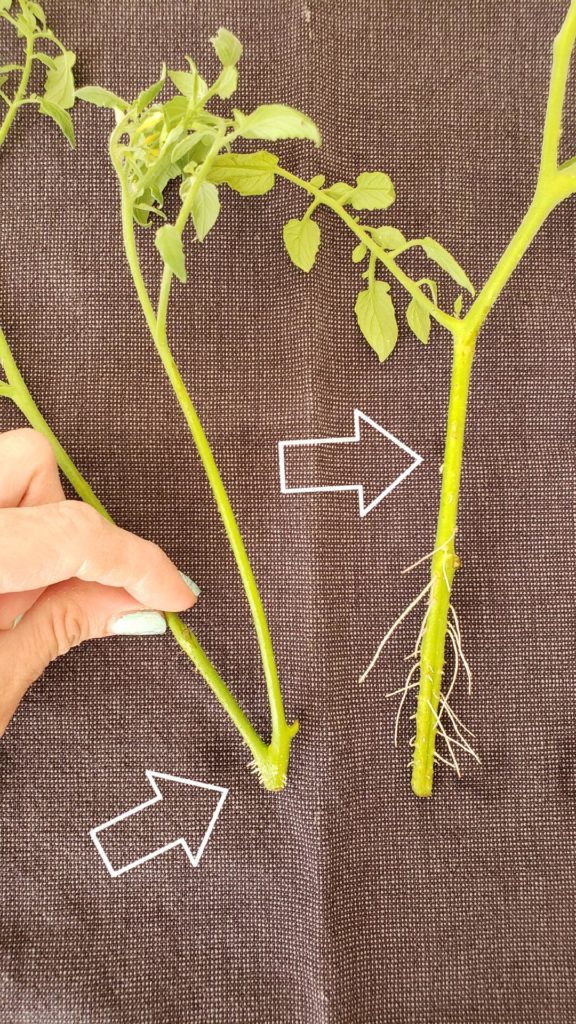
Check these babies out! The above photos were cuttings taken from my existing tomato plant. Just wanted to show you what ONE WEEK in a glass of plain ol’ tap water can do. (Sorry the color is so off on the second photo.) I may have to make a separate post about this one… let me know in the comments below what you’d like to see!
There’s my crash course for you. Drop any questions down below and HAPPY GARDENING! XO

Hi. I’m glad he found lubbalubba.design website, I really
like it, the article is very useful and I shared it!