Adjust to a colder climate with just a few simple steps. Winterizing your home, vehicle and yourself will go a long way in reducing the stress of repairs and GREATLY improve your safety. Snuggle in and enjoy the snowy season knowing you set yourself up for success!
Part 1 of a 3 part series…
How to winterize your vehicle for icy/snowy driving
- Anti freeze is made for good reason
- Tires make a world of difference
- Oil change
- Battery care is a must
- Car wash to save your paint job
- Lube is not just for the engine
- Windshield fluids you never knew existed
- Learn how to drive in icy conditions
- Survival kit and why you need it
Why add antifreeze?
Antifreeze and coolant are the same thing. Antifreeze maintains an even operating temperature in your vehicle’s engine protecting against both freezing and overheating. When your engine overheats, even in snowy/icy weather, your dashboard lights may indicate a high temperature. Modern cars may turn off to prevent engine damage. Worst case is that you keep driving causing unrepairable engine failure.
Antifreeze basically prevents engine failure by extending the life of your engine parts by protecting against corrosion. Sweet deal!
Get this fluid checked and topped off about twice per year, before summer and winter driving.
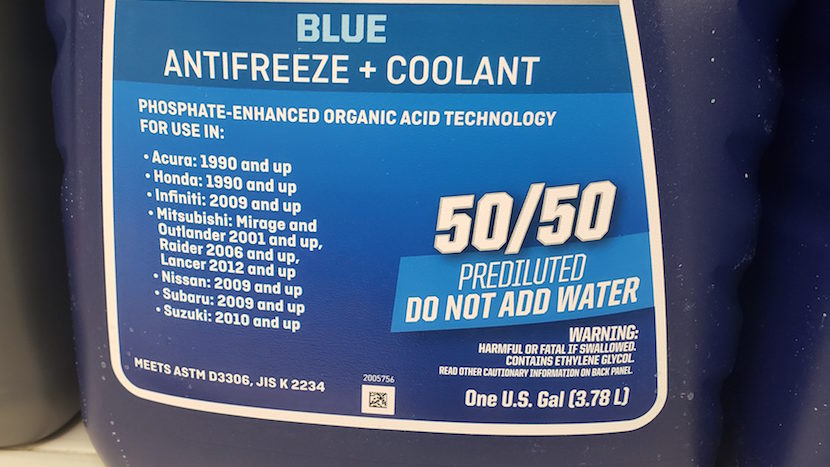
How to add engine coolant/antifreeze yourself-
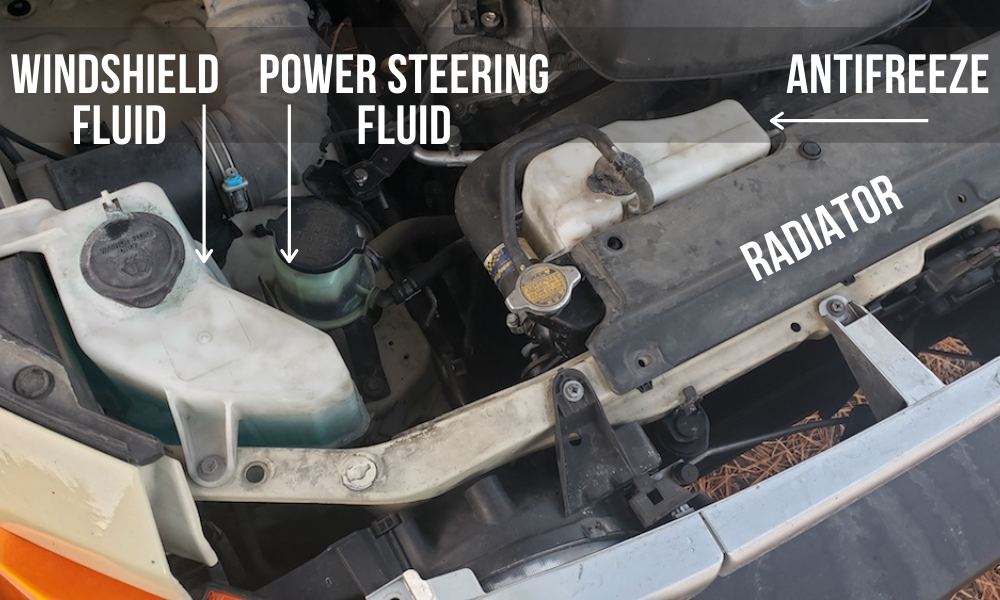
Locating the antifreeze/coolant reservoir is easy. Its usually a clear-ish white-ish color so you can easily see the fluid level without opening it up. It typically rests right up beside your radiator at the front of your vehicle directly behind the grill. Easy to get to. Just be sure your engine is cool.
- Let your engine cool.
- Lift the hood and check the coolant reservoir (photos below)
- If the liquid doesn’t meet the “full line” add a pre mixed antifreeze or a mix of 50/50 antifreeze/water.
Tires make a world of difference
“Winter tires” make me think of studded tires or even snow chains. While studded tires were all the rage in years past we now have rubber compounds that stay soft in freezing temps allowing us to retain better traction in icy conditions. Great! I like my car to be able to stop, go and turn without sliding off the road. You too?
Here is a quick rundown of tire types and what they can do for you:
Keep in mind that tires rated for snow will have a 3 pointed mountain and snowflake symbol on them.
- Snow chains/snow socks are not tires but instead a device that you temporarily wrap around your tire to get better traction on snow or ice. At least 11 states have some sort of requirements that they be carried incase you need them.
- Studded tires are just that- tires with little studs imbedded into the tire itself. These add a bit of traction and control on ice but can not be left on your vehicle throughout the year as they can tear up the bare roadways.
- Winter tires are better able to grip the road due to their aggressive tread and rubber compounds keeping them soft and flexible in icy/snowy conditions. These tires are only good in the winter season as they are too soft to be driven in summer where they will be worn down much to quickly. If you live in a serious winter climate these tires offer the best as far as handling and safety which is not too bad of a trade off for having to remove them after the season ends.
- All-weather tires are meant to be kept on your vehicle year round. They offer deeper treads and a softer compound than a typical tire allowing them to be better suited to milder winters. If you encounter mild, melty snowfall all-weather tires may be the perfect fit for you.
- All-season tires or “mud & snow” tires have a better shape and tread than standard summer tires making them slightly better equipped at getting through slush and snow. These can be left on all year. Mud and snow is usually indicated by an “M & S”.
Winter tire summary–
For the ultimate safely of you and your loved ones winter tires are the way to go. The price and summer storage can be a deterrent for some but is nothing compared the price and time lost due to an accident or injury. Safety first!
Also bear in mind that your tires are only as good as the tread depth… if they are old and worn down past a certain point they don’t work and may not be legal. Tires usually have a “wear bar” fitted into the voids so you can tell at a glance if they are acceptable for driving or not.
Oil change
The reason motor oil needs to be replaced so often is because it is vitally important to the health of your engine. Motor oil is what lubricates all the moving parts and prevents abrasion.
Cold weather causes motor oil to become too cold and thick to flow freely upon starting your vehicle. That is where the winter rated oils come into play. This is a whole conversation in itself… just go get your oil changed. The shop will know what your car needs.
The type of oil you need for your vehicle can be found in your drivers manual or possible printed on a sticker that can be found inside your driver’s side door jam.
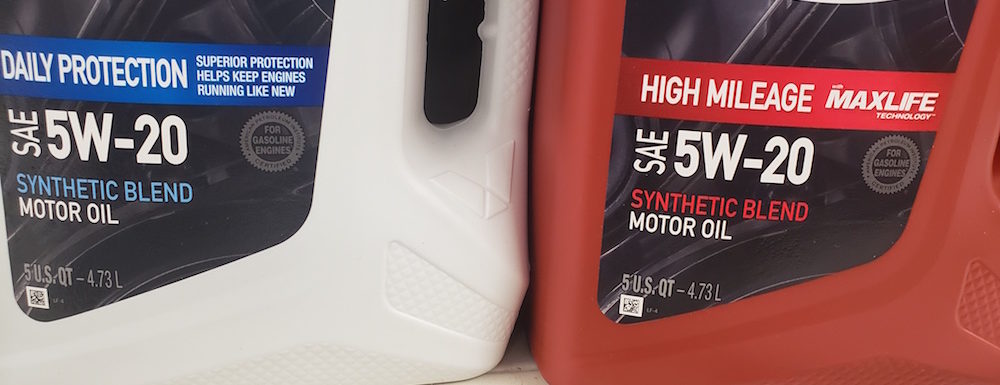
Conventional vs synthetic oil prices
Most vehicles take 5-8 quarts of oil, my Toyota FJ takes just over 6. Below I’ll list the estimated prices for 6 quarts of oil if you were to purchase it online or at a big box store to change your own oil. Hey, it’s not the prettiest DIY but it’s still a DIY nonetheless!
Jugs of motor oil can come in 1 and 5 quart sizes. Don’t forget to pick up a fresh filter too!
Conventional oil- Standard and affordable but contains impurities. About $17 for 6 quarts.
High milage oil- Standard oil that had additives and conditioners added to help reduce the occurrence of leaks and oil consumption in cars with more than 75,000 miles. roughly $20 for 6 quarts.
Synthetic blend oil- Synthetic and mineral oils. Improves your vehicles performance at a lower price point than a full synthetic. Around $24 for 6 quarts.
Full synthetic oil- Offers the best protection for your car at both low and high temperatures. Contains the least impurities. Your car would truly appreciate it! $26+ for 6 quarts.
Typical oil & filter changes at an auto shop can estimate from $35- $75 dollars or so for a conventional oil and $65-$130 for a synthetic. Seems pricy but they do the dirty work and also dispose of the used oil properly.
Basically you’re looking at spending twice as much for a fully synthetic but may not require as many oils changes especially with today’s modern cars. If you tow a trailer, endure lots of stop-and-go traffic, live in an extreme environment (hello icy winters!) you may need to change your oil more often.
Battery
Breaking down in icy conditions due to a dead battery can easily be prevented. Don’t get stranded late at night after work or out running errands with the kids.
As the temperature drops so does the power in your battery. Below freezing it can take up to twice as much power to start the engine… couple that with motor oil not rated for winter and you have a recipe for a car that won’t start.
Have your battery tested and/or replaced as needed. The local auto garage can test the ability of your car’s battery to hold a charge. I’ve even had them test it at the local Autozone (auto repair store) which works out great if I need a new battery I just buy it from them. Win-win.
Always keep a pair of jumper cables in your emergency kit!
Winter car wash & salted roads
Salt from roadways can build up on your vehicle causing damage to paint and rusting the undercarriage. A car wash can help. Don’t go crazy and turn your car into an ice sculpture, just keep in mind that salted roads can cause some issues if you’re not prepared.
Whenever water and oxygen comes into contact with iron or steel it equals rust. Corrosive salt speeds this process along. Cracks in your paint or underneath your car where the metal is exposed can turn into a real mess real quick.
Spraying down the wheel wells and underside of your vehicle every 2 weeks or so can go a long way in preventing rust damage to your vehicle.
Remember two things- First, rinse your car thoroughly before any rubbing or wiping. Salt buildup can scratch your paint. Second, avoid using hot water to melt ice as any weak spots in your glass can crack. No bueno!
Waxing your exterior before the winter season can help protect it from the elements too. Any water that gets into a chip or crack in the paint can freeze, expand and crate more bubbles and chips. Once rust starts it’s a pain to stop.
Lube is not just for the engine
If you’re feeling thorough about your winterizing, go ahead and grease your door hinges, hood and trunk latches, key holes and weather stripping with a silicone spray.
Apparently silicone spray stays slippery even in cold conditions making it ideal to keep ice from bonding your door shut and ripping your weather stripping. Who knew?
Windshield fluids you never knew existed
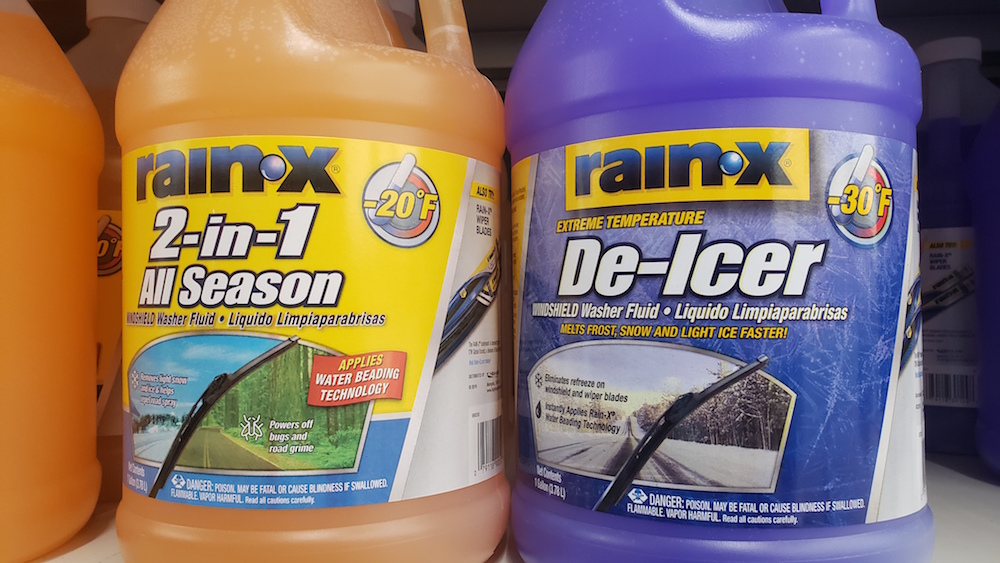
I had no idea that windshield wiper fluid could freeze in the reservoir and burst the tubing… but it makes sense right? I also never thought of spraying windshield wiper fluid to help keep ice from forming on the windshield while you drive.
They make special wiper fluid formulations that melt frost, ice and snow. It also helps to prevent your wiper blades from freezing too. If you live in an icy region I can bet your local supply store carries it.
To DIY your own windshield solution in a pinch you can use 1 part water to 2 parts isopropyl alcohol or even a cheap vodka. The alcohol has a much lower freezing point and can melt ice super fast. Either pour it in your fluid reservoir or apply with a spray bottle or small cup directly to your windshield.
They also make special wiper blades that prevent icy build up for extra safety.
Of course you’ll want to carry an ice scraper with you (longer handles are nice) but don’t be tempted to use them on anything other than glass. I’ve heard of them unintentionally scratching paint.
Fun hack- I have seen on several occasions where an old area rug has been used to cover the windshield the night before so it can be pulled away the next day to reveal a clean windshield. I’m not sure how well that works but it’s something I will try this winter!
Learn how to drive in icy conditions
Can I just say how much watching this video set me at ease and terrified me at the same time. You have no control over other drivers but having control of your own vehicle can make a world of difference!
This video is a must watch for those new to driving in freezing conditions.
Sure it may seem boring at the time, watching a video on oversteering in icy conditions but the real life examples and the dash cam footage really helped me to understand how a vehicle would react to going into a slide as well as how to handle the situation.
(Disclaimer- these are not bad or fatal accidents. Just a few bashed up bumpers. Don’t worry, these are not worst case scenarios!)
What really hit home was how some of the roadways didn’t even look like they would be icy! Also notice the tire tracks in the snow from cars that had just previously spun out. It truly turns my stomach thinking about spinning out on the freeway with my children in the car…
Watch this video and get out there into an empty, snowy/icy parking lot and get your vehicle into a slide or two. Know how your car feels and develop muscle memory. It could potentially save lives and at least save you from totaling your vehicle.
Survival kit- why you need it
Just stop and ask yourself… If your car spun out in the snow and wedged itself in the ditch perhaps outside of town and cell service, what would you need on hand? With the kids? If you had to stay the night in your car?
As much as we all hope these situations never arise they happen all the time. Yes, you need a basic winter vehicle survival kit. Stuff an old duffle bag with the essentials, toss it in the trunk and enjoy peace of mind.
A survival kit could be as large and inclusive as you want it to be. Everything from solar phone chargers, whistles and flares to duct tape, extra boots and tire gauges.
Here’s a list of the snow survival kit basics in addition to jumper cables, basic tool kit, and first aid kit you should have:
- Wool blanket or sleeping bag. (you’re not doing much camping in the winter are you? Put that sleeping bag to good use!) One bag should be good if there are several people. You’ll probably want to huddle for warmth anyway so just unzip it and cover up. Wool blankets can be found from $10-$30.
- Head lamp or flash light. Flash lights are great but head lamps keep your hands free. Changing a tire or shoveling snow in the dark… You’d want a head lamp! A decent head lamp starts at $20 and a cheap one can be picked up for about $5 at Walmart.
- Bag of sand, road salt or non-clumping kitty litter. All of these can be tossed under the tires to help gain traction. Salt also melts ice and snow. Sand gives traction but does nothing to melt snow. If you have space to store a combo go ahead and do it. The extra weight in the back of your vehicle improves stability and helps you maintain control on slick roads. Each bag cost about $5-$10.
- Water and high calorie snacks. From my days of living in the desert I always have water on hand for me or my radiator. Being a mom I always have emergency snacks stashed somewhere. I’m set, are you? Just a couple power bars is all you need. I personally love the Kirkland bars found at Costco. (Helpful tip- keep them in a warm pocket to soften them up!)
- Collapsable or folding snow shovel. One of those things that doesn’t take up too much space but you will be so thankful to have it when you need it. These can be found around $20. your local hardware store may carry them.
- Extra Clothing. It should go without saying that if you are out in the snow you should be dressed appropriately. If you insist on wearing house slippers or high heels make sure you grab a pair of boots just in case. That said, keep an extra layer tucked away incase you end up stranded. Jacket for your core, gloves to prevent frost bite and a hat to prevent precious heat loss.
- Tow strap. While not exclusively for winter travel, you can’t get towed out of a ditch without a tow strap and tow hook. Get a tow strap with loops not hooks and never loop it to a ball hitch. Hooks and ball hitch could snap back into your windshield. Yikes! Tow straps can be found for about $20 and tow hooks (specifically fit your car at the strongest point, usually screws in near your front bumper) run about $5-$20 online. Look up which tow hook your vehicle needs and be sure it fits. You don’t want to hook up your bumper or axel to a tow strap as it could cause more damage… no thank you!
- Roadside flares, glow sticks or collapsable cones. Good to have all year round, these may help alert other motorists to your presence in a snow storm. If your vehicle gets covered in snow it may be hard to spot! Easy to pop into your emergency bag, flares and glow sticks can be found for under $10 and Amazon has a really convenient collapsable traffic cone for $14.
I will be linking parts 2 & 3 of this 3 part series shortly…. Until then STAY SAFE and enjoy your first icy winter!